A readability analysis of 15 publicly available patient education materials from the SVS found that all but three exceeded the 8th-grade reading level, the threshold at which the average adult in the U.S. reads. Additionally, all 15 breached the 6th-grade reading level, the ceiling recommended by both the National Institutes for Health (NIH) and the American Medical Association (AMA).
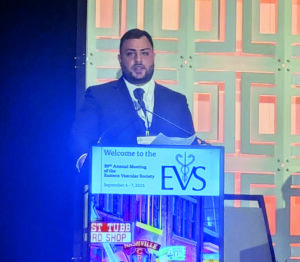
The study was conducted by a team of researchers from Penn State College of Medicine in Hershey, Pennsylvania, led by senior author Faisal Aziz, MD, chief of vascular surgery at the institution, and presented during the 2025 Eastern Vascular Society (EVS) annual meeting in Nashville, Tennessee (Sept. 4–7) by Loui Othman, BS, a second-year medical student at Penn State.
Despite calls for more simplified language in patient-facing resources, previous research has detailed how patient education materials from various specialties exceed readability thresholds and strain patient understanding, Othman told EVS 2025.
The Penn State study used six validated readability tools to assess the difficulty of the SVS patient education materials, covering such vascular conditions as abdominal aortic aneurysm (AAA), carotid disease and peripheral arterial disease (PAD). Among their findings, Othman and colleagues reported that the reading material on AAA recorded the best reading ease score, while that for cerebrovascular disease registered the most difficult—found to be at the college reading level.
The study represented the first comprehensive readability analysis of the SVS materials, said Othman. “We used multiple calculators to enhance our confidence in recording the readability of each handout. Findings are consistent with and support previous research.”
The Penn State team recommend that the readability of the SVS materials be improved in order to enhance patient comprehension, engagement and adherence, he added.
A straw poll conducted at the close of the presentation to determine how many attendees referred patients to SVS materials online saw only a couple of raised hands. “That is also a big issue that needs to be addressed,” remarked moderator Mahmoud Almadani, MD, a vascular surgeon at Maimonides Medical Center in Brooklyn, New York.