
This advertorial is sponsored by Stryker/Inari Medical.
As venous stenting becomes more common, the focus must now shift to what occurs after the procedure, according to consultant vascular surgeon Stephen Black, MD, FRCS. The concept of stent maintenance is key, acknowledging that venous stents—once implanted—will require lifelong monitoring to maintain their function.
“When we stent venous patients, we have to remember that their life expectancy is completely different from patients with arterial disease,” says Black, from Guy’s and St Thomas’ NHS Foundation Trust in London, England, and professor of venous surgery at King’s College London. “These are people who will often live with their stents for 30, 40, even 50 years. It’s unrealistic to think that there will never be a need for ongoing follow-up, or that we can discharge them from care after a year or two.”
Unlike arterial or coronary disease, where long-term mortality remains high, venous patients typically live long, active lives after intervention. “The mortality after venous procedures is extremely low,” Black explains. “That means we have to think about what lifelong care looks like for these patients.”
Why surveillance matters
The first few weeks after stent implantation represent a critical window for detecting early stent failure. “Most stents that fail do so early,” explains Black. To better understand and mitigate this risk, his team at Guy’s and St Thomas’ analyzed a decade of surveillance data from 348 patients with chronic post-thrombotic syndrome (PTS), representing more than 500 treated limbs. The findings were clear: re-intervention occurs early, with nearly 50% taking place within six weeks and two-thirds prompted by ultrasound surveillance rather than symptoms, resulting in an acute presentation. A two-week surveillance scan proved highly predictive of long-term outcome. Patients with >50% in-stent restenosis had significantly poorer patency even after re-intervention (p<0.0001), while 30–50% in-stent stenosis was also associated with higher re-intervention rates (p=0.0019).
“These early scans allow us to identify high-risk patients and act before stent occlusion occurs, improving long-term secondary patency,” says Black. At St Thomas’ Hospital, the standard ultrasound surveillance protocol for venous stents is one day, two weeks, six weeks, three months, six months and one year post-intervention. “Patients with early in-stent restenosis need closer imaging and perhaps earlier intervention,” Black explains. This approach, he says, will make post-stent care more efficient and better targeted.
Black emphasizes that even in patients who initially do well, circumstances can change. “Life happens,” he says. “A patient might do perfectly fine for years on anticoagulation, but if they have children, or undergo another surgery where anticoagulation needs to be interrupted, they can develop in-stent restenosis.”
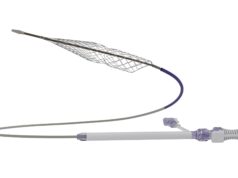
Understanding and defining in-stent restenosis is becoming increasingly important. “We’re starting to look at what constitutes in-stent restenosis and what tools we can use to tackle it,” Black says. “It’s been encouraging to see innovation in this space. Technologies like the RevCore Thrombectomy Catheter and VenaCore Thrombectomy Catheter are part of an expanding toolkit, but we’re still in the early stages.”
Pairing technologies for the future
“Simply debulking the stent is not enough,” Black continues. “We also have to think about what adjunctive technologies we need, whether that’s improving vessel inflow, addressing wall inflammation, or enhancing the biological environment to keep stents patent over time.
“Debulking technology will need to be paired with other tools. Once a stent occludes, it can be almost impossible to cross. You can have the best device in the world, but if you can’t get through the occlusion, you can’t use it. So we need to think about how we cross more effectively and what adjunctive tools will make that achievable.”
He also raises the possibility that stents themselves may alter venous biology over time. “A vein is a capacitance vessel. It’s designed to expand and contract depending on flow,” he explains. “Once you stent it, that adaptability is gone. That may be one of the reasons we see progressive stenosis develop years later.”
Evolving toward biological solutions
Looking ahead, Black envisions new ways to support stented veins and maintain physiologic flow. “We may have to think about how we modulate flow through intermittent pneumatic compression, muscle stimulators or other existing technologies,” he says. “But more interestingly, bioabsorbable materials might play a role. A stent that restores flow, then dissolves, could return the vessel to normal function without lifelong maintenance. We’re not there yet, but it’s something to watch closely.”
Ultimately, Black emphasizes that stent maintenance is a lifelong commitment. “Once we place a stent, we take on the responsibility to look after that patient for as long as they live,” he says. “We have to understand what lifelong management really looks like and make sure we’re ready to deliver it.”
This article is sponsored by Inari Medical. The HCPs sharing their views and opinions here express their experience with Inari Medical devices. The HCPs’ opinions of these devices were formed independently of Inari Medical and may not represent every experience or outcome with the devices.
Indications For Use: The RevCore thrombectomy catheter is indicated for (1) the non-surgical removal of thrombi and emboli from blood vessels and (2) injection, infusion, and/or aspiration of contrast media and other fluids into or from a blood vessel. The RevCore thrombectomy catheter is intended for use in the peripheral vasculature. The VenaCore Thrombectomy Catheter is indicated for (1) the non-surgical removal of thrombi and emboli from blood vessels; and (2) injection, infusion and/or aspiration of contrast media and other fluids into or from a blood vessel. The VenaCore Thrombectomy Catheter is intended for use in the peripheral vasculature. Review complete Instructions for Use, Indications for Use, Warnings, Precautions, Possible Adverse Effects and Contraindications prior to use of the product.
Caution: Federal (USA) law restricts this device to sale by or on the order of a physician. For all non-Inari products, please refer to complete manufacturer Instructions for Use/Intended Purpose. All copyrights and trademarks are the property of their respective owners PRO-2444-USA-EN-v1