
Vascular Specialist readers may wonder why I am now raising this topic amid current challenges facing vascular surgery, like governmental concerns, low reimbursement, specialty competition, the involvement of advanced practice providers without direct affiliation with vascular surgeons, and discussions regarding independent American Board of Medical Specialties (ABMS) recognition.
Yet, I’m certain that you too have noticed a clear trend: physician job opportunities are increasingly shifting from private practice to full-time roles in academic centers, teaching hospitals, and corporate organizations. Indeed, it is estimated that 70–80% of U.S. physicians are employed in a full-time capacity. In some instances, the type of employment chosen depends on factors beyond the control of the applicant. This is exemplified by young physicians who view a full-time position as the sole viable option due to potentially burdensome costs associated with starting in private practice. Alternatively, other vascular surgeons choose full-time positions to align with their professional objectives.
It is clear that full-time medical work can involve challenges such as working conditions, staffing, safety, patient care standards, fair pay, operational inefficiencies, policy conflicts like ageism, rights violations and other key concerns. If a full-time employee’s concerns or grievances are not resolved by institutional leadership, a collective bargaining approach, such as union involvement, is an alternative that may be considered to pursue such matters.
The concept of a labor union was first crystallized in the U.S. in 1794 in Philadelphia by the Federal Society of Journeymen Cordwainers, a group of specialized shoemakers working with fine leather. In 1935, President Franklyn D. Roosevelt signed the Wagner Act, which gave rise to the National Labor Relations Act (NLRA). Since then, full-time employees have been allowed to form a union.
Accordingly, full-time physicians who are employees of a hospital, clinic, medical group or any other healthcare facility also can unionize. The NLRA requires physician members of a union to give employers 10 days’ notice before engaging in a concerted refusal to work. It is important to note that emergency care for patients must always be available, and hospitalized patients must receive medical care. While this mandate might reduce the union’s bargaining power, it doesn’t eliminate it. Clinic closures, delays in administrative tasks and community resentment towards the institutional leadership may ultimately harm an institution’s finances and standing among other competing institutions.
It is worth mentioning that the National Labor Relations Board (NLRB) received a 57% increase in union election petitions across all types of labor in 2022. More relative to medicine, the NLRB received 44 union petitions filed by physicians from 2000 to 2020, averaging two per year, and this jumped to 33 petitions from 2023 to 2024 with an average of 16.5 petitions per year. This likely reflects both a rise in full-time roles and an increase in physician grievances, as corporate interests may have prioritized profit over care quality and physician well-being.
Some of the advantages of creating a union include—but are not limited to—job security, improved wages and benefits, workplace safety, legal protection, career advancement, and equitable compensation across races and ethnicities. Reported disadvantages are union dues, increased conflicts between management and labor, loss of independence, and potential backlash from patients, peers, supervisors and future employers.
To evaluate the strengths, weaknesses, opportunities and threats associated with the creation of a physician union, one needs to carefully and thoroughly evaluate all options. Since laws vary among different states, reaching out to local labor lawyers is highly recommended. Also, given the limited number of vascular surgeons in the U.S., the path to unionization is expected to involve a collaborative approach with other healthcare professionals.
Equally important is to gauge the interest of vascular surgeons in creating a union. For this, I have created an eight-question survey. The sole intent of this questionnaire was to evaluate if the practicing vascular surgeon was interested in unionizing.
I am thankful to Dr. Kathleen J. Ozsvath, past president of the Eastern Vascular Society (EVS), and Dr. Jean Bismuth, past-president of the Society for Clinical Vascular Surgery (SCVS), for their prompt response to disseminate a questionnaire to their members regarding the creation of a union for vascular surgeons. The findings were quite interesting. Seventy-nine percent of the respondents from both societies stated that they would join or consider joining a union if one existed. The most common reason to join a union was the same for both societies: to have a seat at the table when decisions are made. The two other main reasons cited by EVS members were to improve wages and benefits, and to prevent administrative abuse. For SCVS members, preventing administrative abuse was the second top reason, followed by improving wages and benefits.
Younger vascular surgeons may be especially interested in exploring unionization further. Given the recent increased attention paid to unionization by the medical community, the relevance of this topic should not be questioned.
I believe further study and analysis of the pros and cons of unionization, and potential impacts on vascular surgery and vascular surgeons, is warranted, and I plan to ask the SVS to consider adding this topic to future strategic priorities.
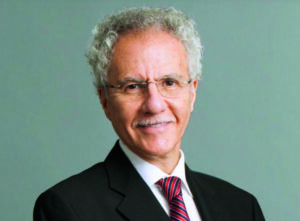
Enrico Ascher, MD, is chair of the SVS Senior Section and a past president of the Society.