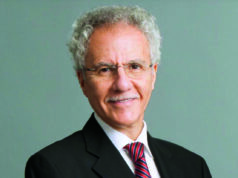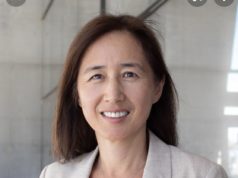

Whether you’re a seasoned vascular surgeon or a first-time attendee, Society for Vascular Surgery (SVS) Program Committee Chair Jason Lee, MD, and Postgraduate Education Committee (PGEC) Chair Claudie Sheahan, MD, want you to know there’s a place—and a pathway—for everyone at the Vascular Annual Meeting (VAM).
The SVS invites all aspiring presenters, including clinicians, researchers, students and international colleagues to participate at VAM 2026, scheduled for June 10–13 in Boston.
“Each of these pathways offers a different way to submit to participate in VAM. All of the submissions and ideas are valuable to the education of our members,” Lee said. “We’re always looking for more volunteerism related to that.”
Education sessions, which constitute nearly 50% of daily programming, are ideal for those interested in both clinical and nonclinical topics. These sessions cater to diverse practice settings through various formats, including interactive discussions, case-based learning, didactic lectures and hands-on workshops. VAM typically features 18–22 education sessions held concurrently during breakfast and afternoon slots from the Wednesday to Friday of VAM.
The new submission process, as proposed by the PGEC, will include sessions that require a full speaker and presentation list as part of proposals in addition to the previous submission fields.
The education sessions prioritize five core topics important to the specialty every year: cerebrovascular disease, aortic disease, dialysis access, peripheral vascular disease and venous disease. Sheahan explains how they prioritize other topics that haven’t been featured, usually on a three-year cycle. “What we want to do is offer expert content to our entire membership and expert content delivered by diverse experts; we don’t want our presenters always to be the same,” she said.
Sheahan broke down the numbers for this past VAM, where over 60% of the presenters were headed to the VAM podium for the first time.
Submission for the education sessions opened July 16 and will close Aug. 20. New for 2025 and continuing into 2026 is the “Hot Topics” format, where individual lectures grouped into a single session highlight emerging issues in vascular surgery. “The hot topics will include single-topic presentations that are current and highly relevant. These presentations are important to present, even if there isn’t a need for a full 90-minute session,” Sheahan explained.
Sheahan uses recent trial results as an example for a “Hot Topic” session. “These are trials that have just been completed and weren’t included in our educational materials. However, we believe it is important to discuss these findings and present them in an educational format,” she said.
Submissions for the “Hot Topics” sessions will open Sept. 17 and close Oct. 15.
SVS section sessions and resident and student programs do not require formal submissions; interested parties should coordinate directly with SVS staff liaisons. Lee explains how different sections and new members can further participate in the VAM planning, such as the Young Surgeons Section, which assists in creating the visual abstracts for accepted plenary papers.
For those with original research or clinical studies, the plenary, international, Vascular and Endovascular Surgery Society (VESS) and poster tracks offer excellent visibility and competitive opportunities. Plenary sessions feature either rapid-paced or full-length presentations, with a full manuscript required for consideration by the Journal of Vascular Surgery (JVS).
“The acceptance of a plenary paper allows for a slightly expedited review, enabling simultaneous publication at the VAM. Last year, over two-thirds of our plenary papers were published simultaneously; as you listen to a talk, you can see that it was immediately published, allowing you to access the details right away. It also provides insights into more granular data that can help shape your interpretation of the paper and influence your practice,” Lee said.
With its scientific sessions, VESS continues its partnership with the SVS and VAM, with its content taking place on the first day of the meeting. To submit an abstract for the VESS sessions, either the submitting author or a co-author must be a VESS member.
“While many abstracts may not be chosen for the plenary sessions, there are still numerous excellent scientific contributions that will be considered for the VESS scientific sessions on that Wednesday,” he added. “I greatly appreciate the contribution of VESS to VAM and recognize their significant support.”
The International Plenary Session and the International Young Surgeons Competition offer a global platform for emerging voices in vascular surgery.
Posters are categorized into three types: interactive, competition and international. The winners from the Poster Competition and the International Poster Competition advance to the Poster Championship on Saturday morning, allowing for podium presentations. The submission window for plenaries, VESS sessions, international, posters and competitions will be from Nov. 12–Jan. 7, 2026.
Late-breaking abstracts—returning for the 2026 meeting—will showcase cutting-edge data and innovative studies. “With late-breaking and Hot Topic abstracts, we will explore the submissions and determine how to organize a session around them. Our goal is to provide opportunities for those who may not have a complete session idea but still want to present. This way, everyone has a chance to share their work,” Sheahan said.
Late-breaking abstract submissions will run from Feb. 4–March 2, 2026.
In addition to submitted content, VAM 2026 will feature invited sessions selected by the SVS Executive Board (EB) and the Program Committee, with suggestions from the SVS membership. These include the James S.T. Yao Resident Research Award, W. Stanley Crawford Critical Issues Forum, Roy Greenberg Distinguished Lecture on Innovation, Frank J. Veith Distinguished Lecture on Advances in PAD and Limb Salvage, the awards ceremony and SVS Presidential Address.
Meanwhile, the SVS Keynote Series will enter its third year at VAM. Lee discusses how various groups have collaborated to incorporate feedback from previous years, allowing them to develop a keynote series that is impactful for the membership.
Regarding the distinguished lectures, Lee highlights opportunities for the SVS leadership to focus on current ideas, concepts and innovations, allowing SVS members to engage directly with the EB and elected officers to share their suggestions.
“At the end of the day, it’s the SVS members who attend VAM. The Program Committee and the EB want to hear from you, the members, about your feedback on these invited sessions and any suggestions for improvement. I’m always encouraged by the ideas our members have to make VAM even better,” said Lee.
For more information on VAM 2026, visit vascular.org/VAM.